

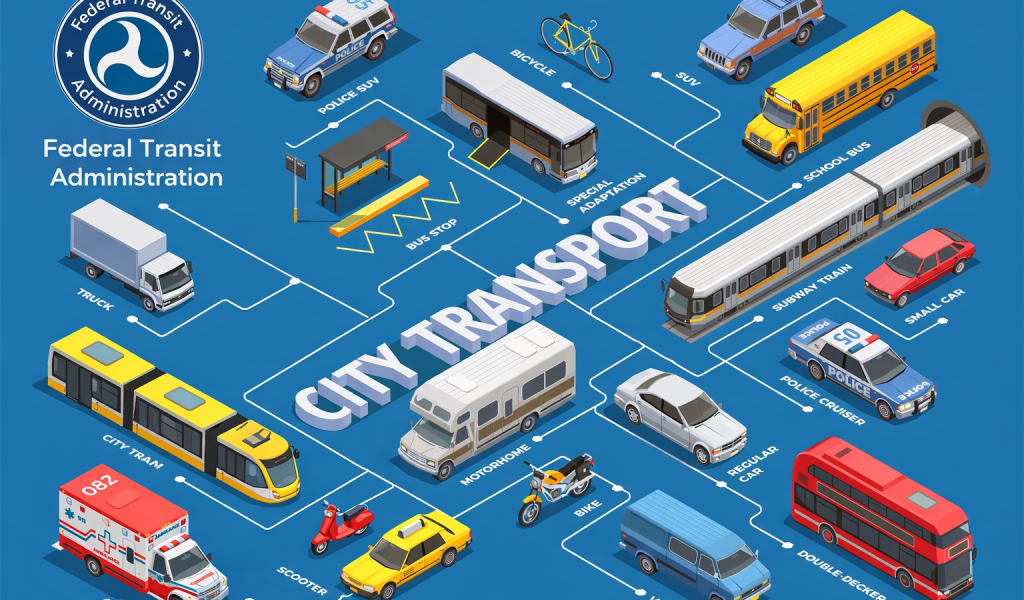
Safety in public transportation is not optional, it is federally mandated. Under 49 CFR Part 655, the Federal Transit Administration (FTA) outlines strict drug and alcohol testing requirements for transit agencies and their partners receiving federal funding under 49 U.S.C. §§ 5307, 5309, and 5311.
These regulations exist for one reason: protecting passengers, employees, and the public.
Who Must Comply?
The rule applies to any recipient or sub-recipient of federal transit funding, as well as contractors performing safety-sensitive functions.
Covered Employees
A covered employee is anyone performing safety-sensitive duties, including:
- Revenue vehicle operation (bus, rail, paratransit, etc.)
- Revenue vehicle and equipment maintenance
- Revenue vehicle control or dispatch (when designated)
- CDL-required non-revenue vehicle operation
- Armed security personnel
If the role impacts operational safety, it falls under FTA oversight.
Contractors
Contractors are also subject to compliance if they provide safety-sensitive services under either a formal contract or an ongoing working relationship. Federal responsibility does not disappear when services are outsourced — compliance follows the function.
What Substances Are Tested?
FTA regulations require testing for the following five drug categories:
- Marijuana (THC)
- Phencyclidine (PCP)
- Amphetamines
- Opiates (including heroin, hydrocodone, hydromorphone, oxycodone, and oxymorphone)
- Cocaine
These substances are identified because of their direct impact on judgment, reaction time, and overall safety performance.
When Is Testing Required?
FTA-mandated testing includes four primary categories:
- Pre-Employment Testing
Required before an individual performs safety-sensitive duties. - Random Testing
Conducted throughout the year using scientifically valid selection methods to ensure deterrence and compliance. - Post-Accident Testing
Required following qualifying incidents to determine whether substance use contributed to the event. - Reasonable Cause Testing
Triggered when trained supervisors observe specific, articulable signs of drug or alcohol use.
Why It Matters
FTA drug and alcohol testing programs are not merely administrative checkboxes. They are foundational risk-management safeguards designed to protect human life, preserve public trust, and ensure federal funding integrity.
Transit systems operate in environments where a single impaired decision can affect dozens — sometimes hundreds — of people. Compliance with 49 CFR Part 655 ensures that safety remains the highest operational priority.
If you manage or contract with a federally funded transit agency, understanding and implementing these requirements correctly is essential. Compliance is not just about regulation — it is about responsibility.
FAA Drug & Alcohol Testing: What Aviation Employers Must Know
The Federal Aviation Administration (FAA) enforces strict drug and alcohol testing requirements under 14 CFR Part 120, applying to all air carriers and operators certificated under Part 119.
Every employer’s testing program must also comply with 49 CFR Part 40, which establishes the federal procedures for workplace drug and alcohol testing.
Who Is Covered?
FAA regulations apply to employees performing safety-sensitive aviation duties, including:
- Flight crew members
- Flight instructors
- Flight attendants
- Aircraft dispatchers
- Aircraft maintenance and preventive maintenance personnel
- Ground security coordinators
- Aviation screening personnel
- Operations control specialists
If a role directly impacts aircraft operations or passenger safety, it falls under FAA oversight.
What Substances Are Tested?
FAA-mandated drug panels include:
- Marijuana (THC)
- Phencyclidine (PCP)
- Amphetamines
- Opiates (heroin, hydrocodone, hydromorphone, oxycodone, oxymorphone)
- Cocaine
These substances are prohibited due to their impact on cognitive function, reaction time, and operational judgment.
When Is Testing Required?
FAA-regulated employers must conduct:
- Pre-employment testing
- Random testing
- Post-accident testing
- Reasonable cause testing
- Follow-up testing (when required after a violation)
In aviation, safety is non-negotiable. FAA drug and alcohol testing programs ensure that those responsible for aircraft operations meet the highest standards of accountability and regulatory compliance, protecting passengers, crews, and the national airspace system every day.
FMCSA Drug & Alcohol Testing: Compliance for Commercial Drivers
The Federal Motor Carrier Safety Administration (FMCSA) enforces drug and alcohol testing regulations under 49 C.F.R. Part 382, applying to employers and drivers operating commercial motor vehicles (CMVs) in interstate commerce.
Even an owner-operator employing only themselves must participate in a compliant random testing program within a pool of two or more covered drivers.
Who Is Covered?
FMCSA regulations apply to any driver required to hold a Commercial Driver’s License (CDL) operating:
- Combination Vehicles (Group A) – Gross combination weight of 26,001 pounds or more, including a towed unit over 10,000 pounds
- Heavy Straight Vehicles (Group B) – Gross vehicle weight of 26,001 pounds or more
- Vehicles designed to transport more than 15 passengers (not for compensation)
- Vehicles transporting placarded hazardous materials
If the vehicle meets federal weight, passenger, or hazardous material thresholds, the driver is subject to FMCSA testing requirements.
What Substances Are Tested?
FMCSA mandates testing for:
- Marijuana (THC)
- Phencyclidine (PCP)
- Amphetamines
- Opiates (heroin, hydrocodone, hydromorphone, oxycodone, oxymorphone)
- Cocaine
These substances are prohibited due to their impact on driver alertness, reaction time, and public safety.
When Is Testing Required?
Employers must conduct:
- Pre-employment testing
- Random testing
- Post-accident testing
- Reasonable cause testing
- Follow-up testing
Nationwide Compliance Expertise
Beyond FMCSA programs, federally regulated testing also applies under agencies such as the Federal Transit Administration (FTA), Federal Aviation Administration (FAA), Federal Railroad Administration (FRA), Pipeline and Hazardous Materials Safety Administration (PHMSA), and the United States Coast Guard (USCG).
With DBE certifications in Arizona, Arkansas, California, Florida, Mississippi, Nevada, New Jersey, North Carolina, Tennessee, and Texas, our team brings deep regulatory knowledge, decisive problem-solving, and experienced program management to help employers stay compliant — and keep America’s roadways safe.
FRA Drug & Alcohol Testing: Railroad Safety Compliance
The Federal Railroad Administration (FRA) enforces drug and alcohol testing under 49 CFR Part 219, applying to railroads and their contractors operating within the general railroad system of transportation.
Certain operations — such as plant railroads, tourist or historic railways not connected to the general system, and isolated rapid transit systems — may be excluded. Larger railroads (over 400,000 annual employee work hours) and qualifying contractors must also comply with Subpart I annual reporting requirements.
Who Is Covered?
FRA testing applies to employees performing covered service functions subject to hours-of-service laws, including:
- Conductors and trainmen
- Switchmen
- Locomotive hostlers/helpers
- Train dispatchers
- Signalmen and operators
- Utility employees
- Maintenance-of-way workers (inspection, construction, repair, flagmen, watchmen/lookouts)
If the role directly impacts train movement or track safety, it falls under FRA oversight.
What Substances & Testing Types?
FRA mandates testing for:
- Marijuana (THC)
- Phencyclidine (PCP)
- Amphetamines
- Opiates (including heroin and semi-synthetic opioids)
- Cocaine
Required testing includes pre-employment, random, post-accident, reasonable cause, and follow-up testing.
PHMSA Drug & Alcohol Testing: Pipeline & LNG Safety
The Pipeline and Hazardous Materials Safety Administration (PHMSA) regulates drug and alcohol testing under 49 CFR Part 199 for pipeline operators and LNG facilities within the United States, including the Outer Continental Shelf.
Covered Functions
Testing applies to employees and contractors performing:
- Operations
- Maintenance
- Construction
- Emergency response
Safety-sensitive pipeline work demands strict compliance to protect infrastructure, communities, and the environment.
Testing panels and required testing types mirror DOT standards: pre-employment, random, post-accident, reasonable cause, and follow-up testing.
USCG Drug Testing: Maritime Credential Protection
The United States Coast Guard (USCG) enforces chemical testing under 46 CFR Part 16, following Department of Transportation procedures outlined in 49 CFR Part 40.
Who Is Tested?
Testing applies to credentialed mariners and individuals serving aboard U.S.-owned vessels under the authority of:
- A license
- Certificate of registry
- Merchant Mariner Credential
Compliance & Consequences
A failed drug test:
- Is presumed drug use under federal regulation
- Must be reported to the Coast Guard Officer in Charge of Marine Inspection
- Can result in denial of employment or removal from vessel duties
- Requires Medical Review Officer clearance and regulatory compliance before return to safety-sensitive work
Substances & Testing Types
USCG testing includes:
- Marijuana (THC)
- Phencyclidine (PCP)
- Amphetamines
- Opiates
- Cocaine
Required testing includes pre-employment, random, post-accident, reasonable cause, and follow-up testing.